 Phone: +8618330222305
 Email: sales08@bdhuazheng.com


Phone: +8618330222305
Email: sales08@bdhuazheng.com
Time: 2025-12-16 Author: 铧正 Click: 2045 Time
In the realm of electrical testing and maintenance, ensuring the reliability and safety of power systems is paramount. One essential tool that professionals rely on is the primary current injection tester. This device plays a crucial role in verifying the performance of protective relays, circuit breakers, and other critical components in electrical systems.
A primary current injection tester is designed to inject a high level of current directly into the primary side of a device under test. This allows technicians to simulate real-world operating conditions and assess the functionality of protective devices. The ability to conduct such tests is vital for several reasons.
Firstly, safety is a primary concern in any electrical installation. By using a primary current injection tester, technicians can ensure that protective relays and circuit breakers operate correctly under fault conditions. This testing helps to prevent catastrophic failures that could lead to equipment damage, system outages, or even personal injury.
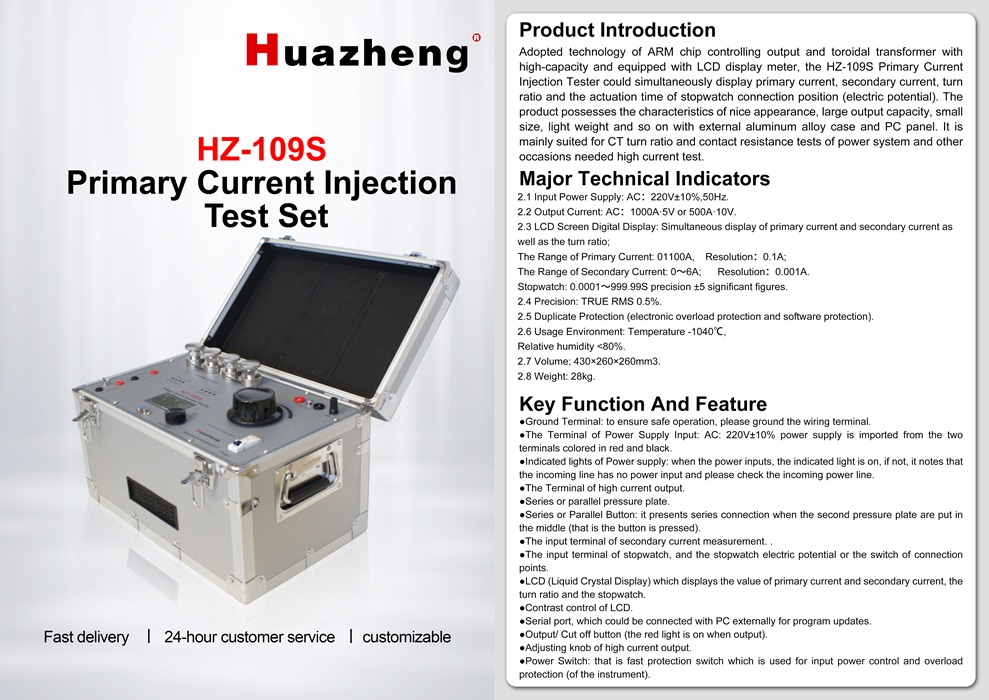
Secondly, regular testing with a primary current injection tester is essential for compliance with industry standards and regulations. Many organizations require routine testing of protective devices to maintain operational integrity and ensure that safety protocols are followed. By utilizing this testing equipment, companies can demonstrate their commitment to safety and regulatory compliance.
Moreover, a primary current injection tester aids in troubleshooting and maintenance. When a protective device fails to operate as expected, injecting current allows technicians to pinpoint the issue quickly. This efficiency not only saves time but also reduces costs associated with prolonged downtime.
In conclusion, a primary current injection tester is an indispensable tool for electrical professionals. Its ability to simulate real-world conditions, ensure safety, maintain compliance, and facilitate troubleshooting makes it a vital component in the maintenance of reliable and safe electrical systems. Investing in this testing equipment is not just a choice; it is a necessity for any organization that prioritizes safety and operational efficiency.
![[sort:name]](/static/upload/image/20231109/1699520298738135.jpg)
 +8618330222305
 +8618330222305
 sales08@bdhuazheng.com
 0086-18330222305
 Julia Jin-huazheng
